Create AutoText for Frequent Responses in Outlook

Vivian Lee
  1. Find the “model text” that you want to use as the AutoText entry and copy it into your Windows clipboard (CTRL+C) (this could be a frequent paragraph or short phrase that you type often in numerous responses. Draft a new email and paste it into the body of the new email. Format it and clean it up to the format you want it in (bullets, numbered, paragraphs, etc). We suggest removing any client names to make it generic.
  2. Select the text and then select Insert > Quick Parts > AutoText > Save Selection to AutoText to AutoText Gallery
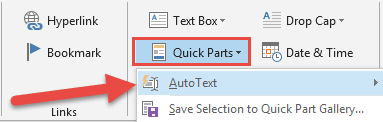
    AutoText in Outlook
  3. Give it a name (nickname) with at least 4 characters.
  4. To use the AutoText entry, simply place your cursor in the body of the email (in the desired location), and then type the first 4 characters of the AutoText name. You will see a pop-up preview of your entry. If you want to insert it, simply hit your Enter key. Another way to insert it is to select Insert > Quick Parts > AutoText > and then select the AutoText entry from the preview gallery.
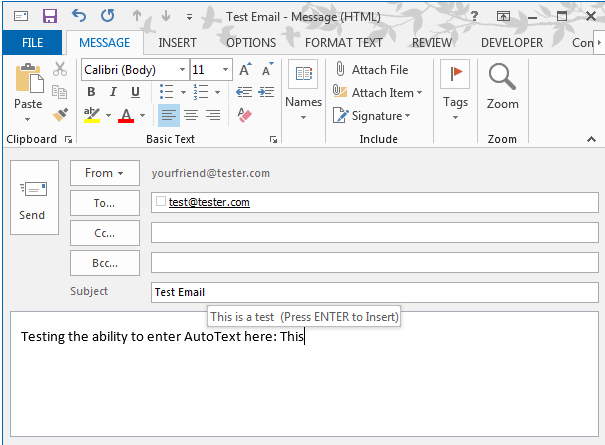
    AutoText entry in Outlook

New Resources In Your Inbox

Get our latest cybersecurity resources, content, tips and trends.

Other resources that might be of interest to you.

11+ Ways Air-Gapped Systems Improve Your Security

Every network connection is a potential highway for attackers. Sure, firewalls, intrusion detection systems, and endpoint protection help, but they’re still fighting battles on a connected battlefield where determined attackers eventually find a way th
Jesse Sumrak
>>Read More

Disaster Recovery as a Service (DRaaS): What It Is & How It Works

Your business data isn’t just an asset—it’s the lifeblood of your operations. However, it’s under attack. Cybercriminals know how valuable it is, and they either want it for themselves or want to sell it back to you (aka, ransom).  Fortunately, you’re

Cyber Compliance: Your Untapped Competitive Advantage

Most business leaders still view cybersecurity compliance as the corporate equivalent of a dental cleaning: necessary, expensive, and something they’d rather not think about. But when a single ransomware attack costs nearly $2 million, that mindset isn
Jesse Sumrak
>>Read More